04
Hearing Aid Repairs and Maintenance
Most repairs we see could have been prevented by daily cleaning, moisture protection, and a maintenance check every six months. We can usually tell you on the spot whether yours can be saved.
Chapter 01
Daily cleaning, and what it prevents.
A hearing aid sits in your ear canal all day, so it collects earwax, moisture, and skin oils constantly. Wiping it down every day and clearing the wax guard is the single habit that stops the most common failure: a blocked microphone or receiver that leaves the aid sounding muffled or dead.
It takes a minute, and it's the difference between a device that lasts years and one that's back on our bench every few months for the same avoidable problem.
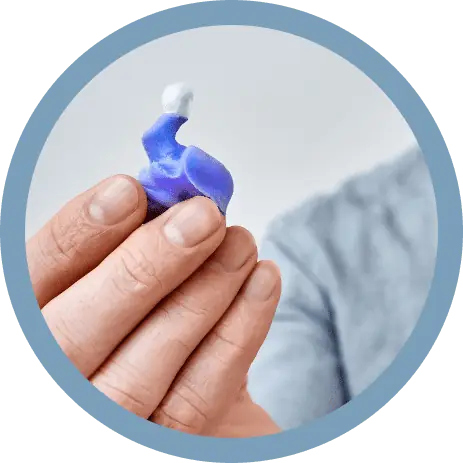
A hand holding a freshly taken custom ear mold impression at Chappell Hearing Care Centers
Moisture is the thing that kills them.
More hearing aids fail from moisture than from almost anything else: sweat during the day, humidity, getting caught in the rain, or being left in a bathroom overnight. Moisture gets into the electronics and corrodes connections that can't always be repaired.
Protecting hearing aids from moisture is one of the plainest, most repeated pieces of advice we give patients, because it's also one of the easiest problems to prevent and one of the hardest to fix once it's happened. A dry storage case at night does most of the work.
Chapter 03
The six month professional maintenance check.
Bring your hearing aids in for a professional maintenance check every six months, even if nothing seems wrong. We clean the parts you can't easily reach yourself, check the seals and tubing, and catch small wear before it turns into a repair.
We also take custom ear mold impressions in house, so a mold that's shifted or a fit that's gone slightly loose over time can be corrected without sending anything out.
Wearing them to exercise, taking them out to sleep.
Modern hearing aids are moisture resistant and safe to wear during exercise. You don't need to leave them at home for a workout or a walk in the heat.
Sleep is different. Most people remove their hearing aids at night, mainly to conserve battery and to give their ears a rest, not because the devices can't handle it. If yours won't turn off, won't hold a charge, or sound different than they used to, bring them in. We'll tell you honestly whether it's a quick fix or something that needs replacing.
“I have been a customer of Chappell Hearing Care Center for 17 years and several sets of hearing aids. I always received professional care. The after purchase follow up for hearing test and readjustment of my hearing aids is a great part of their service.” Larry Alberts left that review on Google after 17 years as a patient here.